Become DANISH
SPEAK LIKE A REAL NATIVE
AUTHENTIC DANISH LIVING
From its early formation as a unified kingdom in the 10th century to its rise as a major maritime power during the Viking Age and beyond, Denmark has played a central role in shaping European and Nordic history. Its cultural identity reflects a fascinating blend of Norse heritage, medieval Christian influence, and centuries of monarchy that continue to define Danish society today. With its remarkable architectural heritage—from ancient runestones and Viking fortresses to Renaissance castles and modern design landmarks—Denmark offers a timeless journey through a culture that harmoniously unites history, craftsmanship, and innovation.
Following the end of the Cold War, Denmark further consolidated its place as a progressive and influential European democracy. The country strengthened its commitment to education, sustainability, and social welfare while maintaining its cultural traditions and strong sense of national identity. A founding member of NATO and an active member of the European Union since 1973, Denmark has positioned itself as a leader in renewable energy, digital governance, and human rights. Its thriving creative industries, from world-class architecture and design to the global success of Danish cinema and cuisine, reveal a nation that honors its heritage while shaping the modern world.
We have created a selection of Danish words and expressions that you won’t find in any standard textbook or course, designed to help you sound more natural and truly understand the deeper layers of Danish culture. These expressions capture the humor, subtlety, and warmth that define everyday communication in Denmark—expanding your knowledge of the country’s history, mindset, and unique way of life.


EXPAND YOUR KNOWLEDGE
If you are serious about learning Danish, we recommend that you download the Complete Danish Master Course.
You will receive all the information available on the website in a convenient portable digital format as well as additional contents: over 15.000 Vocabulary Words and Useful Phrases, in-depth explanations and exercises for all Grammar Rules, exclusive articles with Cultural Insights that you won't in any other textbook so you can amaze your Danish friends thanks to your knowledge of their country and history.
With a one-time purchase you will also get hours of Podcasts to Practice your Danish listening skills as well as Dialogues with Exercises to achieve your own Master Certificate.
Start speaking Danish today!
ÆGGEKAGE
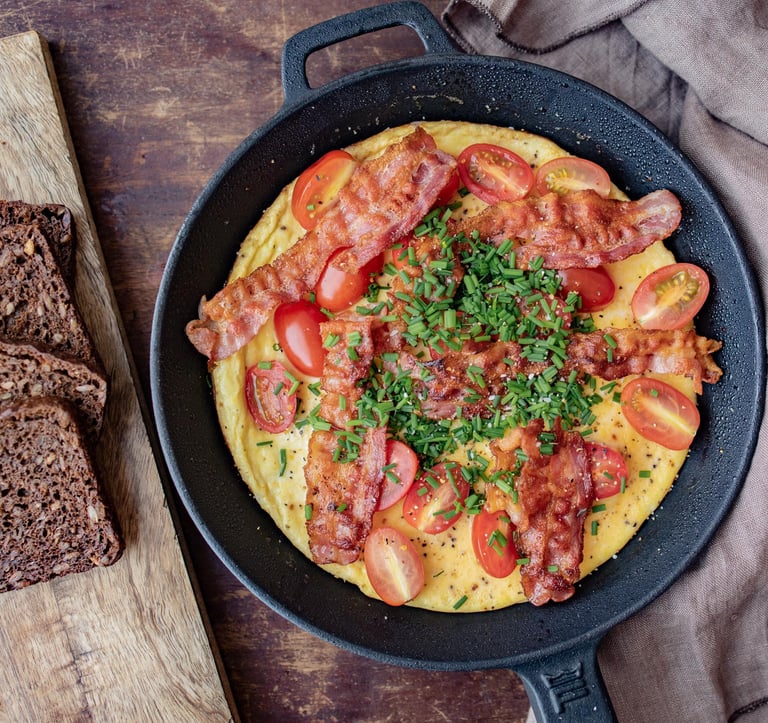
The Danish æggekage (egg cake) is a traditional national dish deeply rooted in rural and home cooking culture. It is not a dessert but a savory, thick, and fluffy omelet prepared in a frying pan and usually served for lunch or dinner. The dish was historically popular among farmers because it was filling, economical, and made with ingredients available in every Danish kitchen—primarily eggs, milk, and flour. The æggekage was especially common in the 19th and early 20th centuries when eggs were a staple product of Danish agriculture, and it remains a familiar comfort food today.
Preparation of æggekage begins by whisking eggs with milk and sometimes a small amount of flour for extra consistency. The mixture is seasoned with salt and pepper and poured into a hot pan greased with butter. It is cooked slowly to ensure a soft texture while maintaining a lightly browned surface. Some families prefer baking it briefly in the oven for an even thickness. The classic serving style includes crispy slices of fried bacon, fresh chives, and rye bread on the side. In some regions, especially in southern Jutland, it is enjoyed with tomato slices or small shrimp, adding a local variation to the national recipe.
The æggekage has cultural significance beyond its nutritional value. It symbolizes the simplicity and resourcefulness of Danish cooking, which focuses on seasonal ingredients and balanced flavors. The dish reflects the broader culinary philosophy of det danske køkken (the Danish kitchen), emphasizing freshness and the use of natural, local produce. It also embodies the concept of hverdagsmad (everyday food), which defines meals as practical, hearty, and made for sharing. This tradition remains central to Danish family dining.
In modern Denmark, æggekage continues to be served in restaurants, cafés, and homes. It appears on menus in both traditional countryside inns known as kroer (country inns) and in urban eateries that reinterpret old recipes through new culinary trends. Its enduring presence is also tied to Danish social customs, such as weekend family gatherings or communal meals, where warm dishes are shared at a large table.
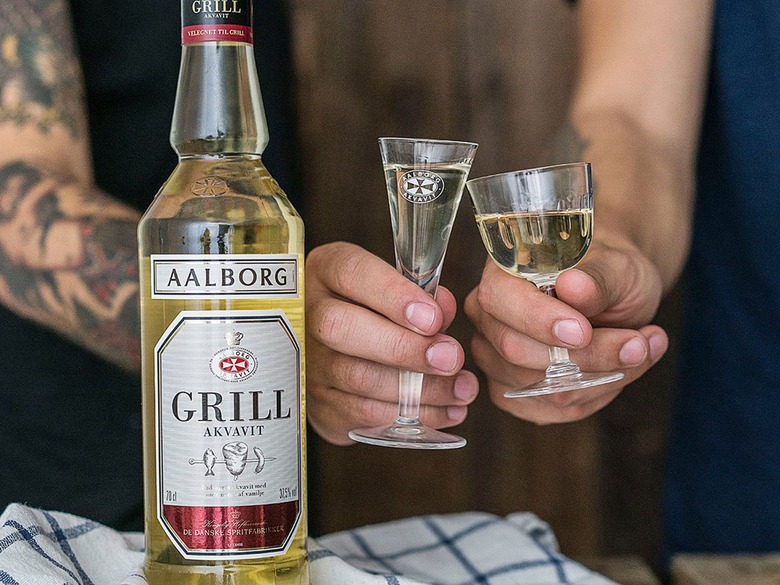
AKVAVIT
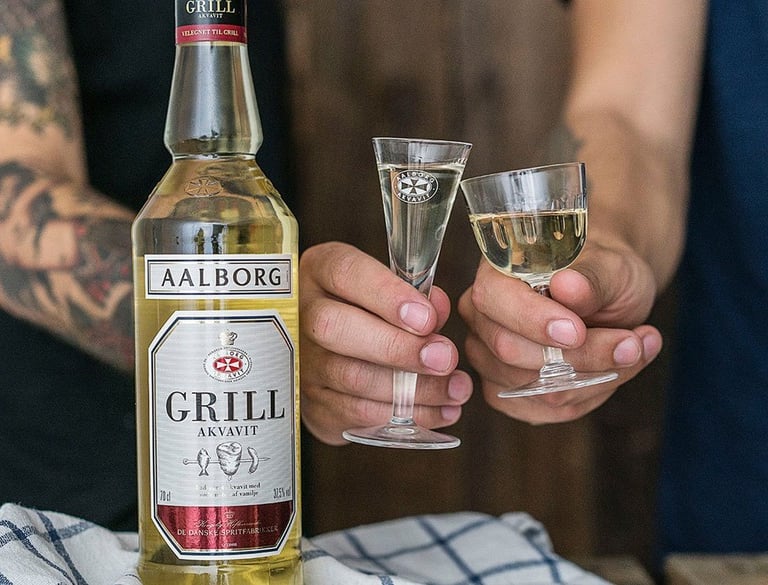
The Danish akvavit (water of life) is a traditional distilled spirit made primarily from grains or potatoes and flavored with a blend of herbs and spices, most notably caraway or dill. It has been produced in Denmark since the 15th century and continues to hold a central role in both festive and everyday dining culture. Akvavit is typically consumed chilled and served in small glasses, often during lunches and celebrations such as Christmas, Easter, and Midsummer. It is closely associated with the Danish custom of snaps (a shot), where friends and family raise a toast before drinking.
The production of akvavit involves distilling neutral alcohol and then infusing it with natural flavors. Caraway, dill, fennel, coriander, and citrus peel are among the most common ingredients. The liquor is then aged in steel or oak casks, depending on the desired flavor profile. Golden varieties derive their color and mellow taste from aging in wooden barrels, while clear versions are lighter and sharper. Danish distilleries such as Aalborg Akvavit have become internationally recognized for maintaining traditional methods while ensuring consistent quality.
In Danish dining culture, akvavit is closely tied to the concept of frokostbord (lunch table), a social meal consisting of open-faced sandwiches known as smørrebrød (buttered bread). Each glass of akvavit is usually accompanied by herring, cold cuts, or pickled dishes, and it serves to cleanse the palate between courses. The drinking ritual often includes eye contact, a cheerful “Skål!” (cheers!), and a sense of togetherness that reflects the communal nature of Danish hospitality.
Historically, akvavit was also regarded as medicinal. In the 16th and 17th centuries, it was believed to aid digestion and preserve health, especially during long northern winters. Its name, derived from Latin “aqua vitae,” reflects its early use as a tonic or remedy. Over time, it evolved into a national drink representing Danish craftsmanship, celebration, and continuity of cultural heritage.
ALTINGET
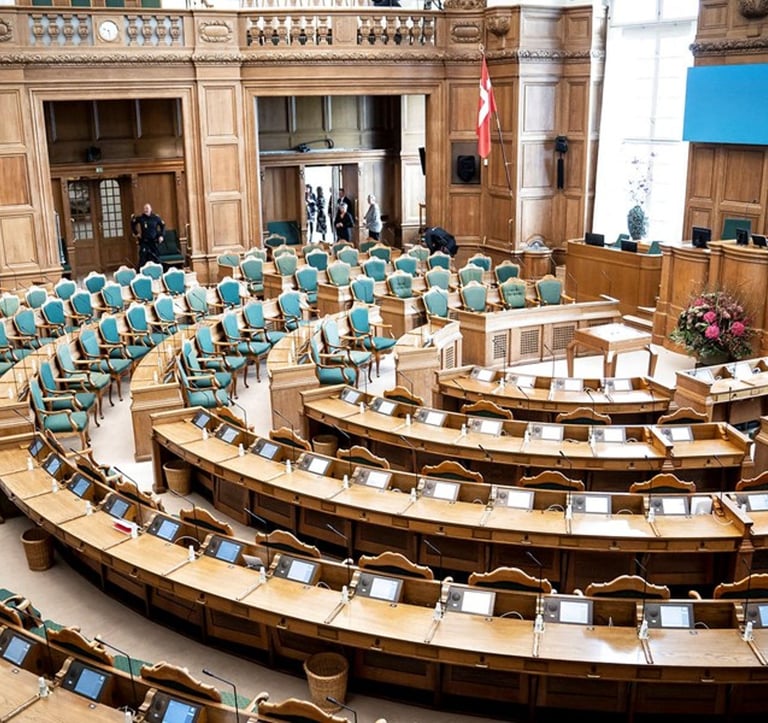
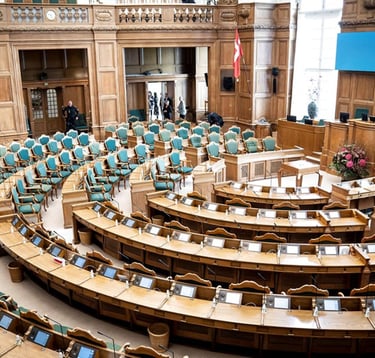
The Danish altinget (the assembly) refers historically to the ancient Nordic gatherings where free men met to discuss laws, settle disputes, and make political decisions. The term is related to early democratic traditions that existed in medieval Scandinavia, and in Denmark, it symbolizes the evolution from tribal assemblies to modern parliamentary governance. Although the original assemblies disappeared centuries ago, the word continues to hold cultural and historical meaning. Today, Altinget is also the name of a respected Danish political news platform that provides in-depth coverage of government affairs, policy debates, and elections.
In historical context, altinget served as both a legislative and judicial institution. Participants gathered in open-air settings, often at symbolic or neutral locations, to represent local communities. These meetings laid the foundation for consensus-based decision-making, a principle still reflected in Danish political culture. The concept emphasized equality among citizens and public participation in governance, long before representative democracy became formalized. Early assemblies in Denmark influenced the development of Tinget (the Thing), the legislative body that later evolved into the modern Folketinget (the Parliament).
The Danish Folketinget, officially established by the 1849 Grundlov (Constitution), is the direct successor to this tradition. It retains the emphasis on dialogue, compromise, and inclusivity that characterized earlier communal decision-making. The continuation of the altinget spirit can be seen in Denmark’s proportional representation system, which ensures that a wide range of political voices are represented. This system mirrors the ancient practice where each participant, regardless of rank, had the right to speak and propose changes.
Modern Denmark continues to uphold transparency and civic engagement, principles that can be traced back to altinget. The country’s political culture values open debate and practical consensus over ideological conflict. In this sense, altinget is not only a historical term but also a living idea that shapes the way Danes perceive government responsibility and citizenship. The contemporary Altinget.dk news platform, established in 2000, carries the same name as a deliberate nod to these democratic origins.
ANDERS AND
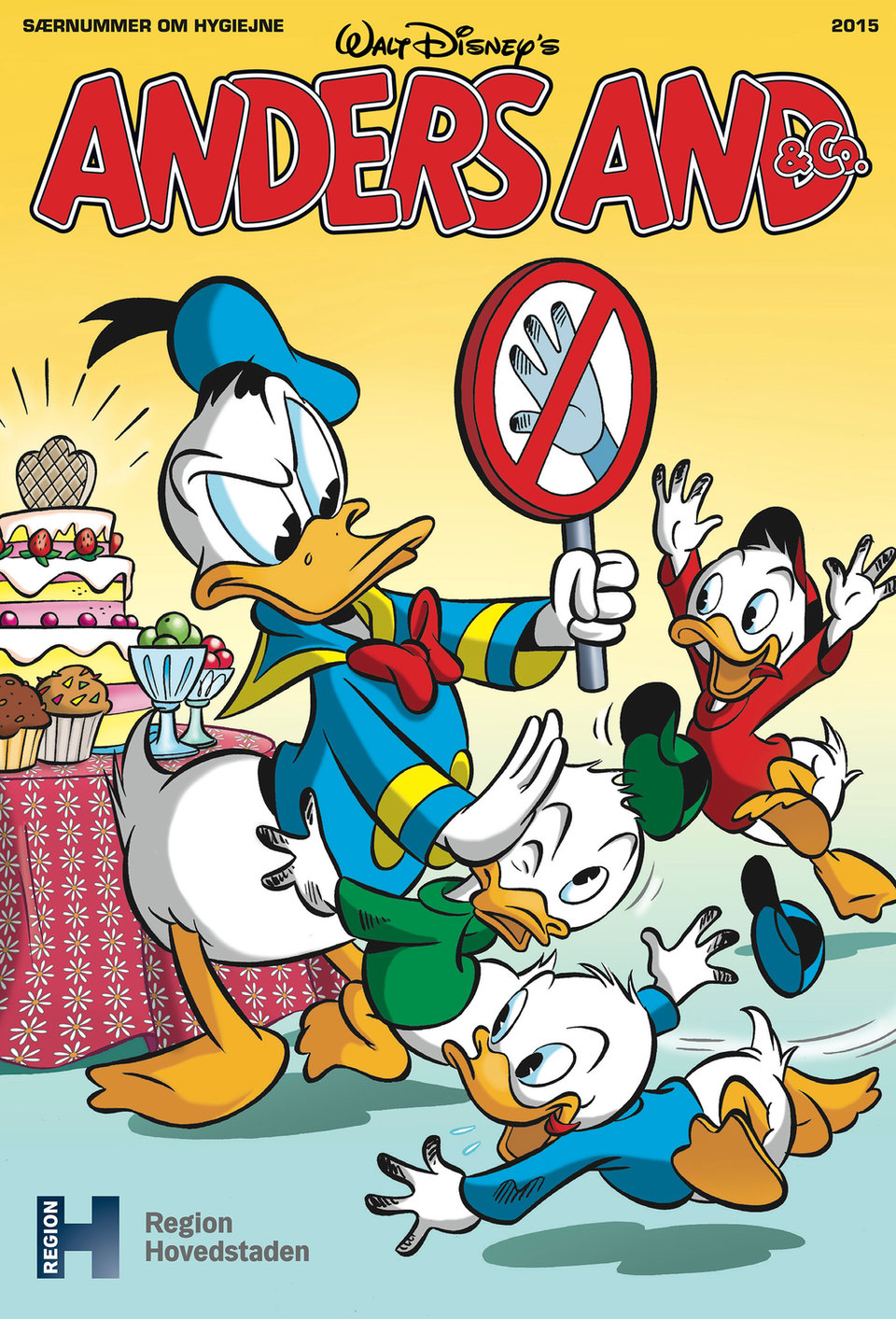
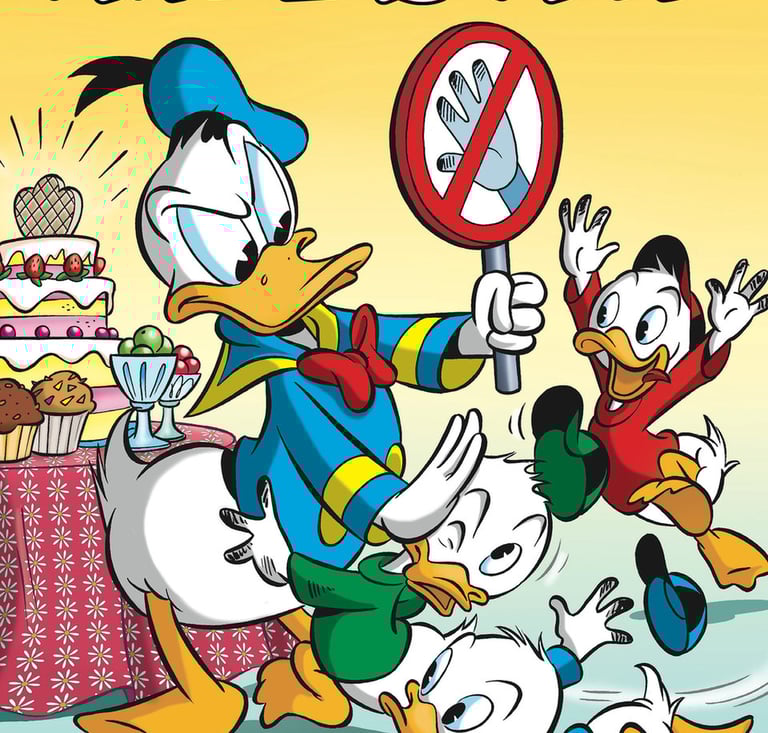
The Danish Anders And (Donald Duck) is one of the most recognizable and enduring figures in Danish popular culture. While originally created by Walt Disney in the United States, the Danish adaptation developed a strong and independent identity, becoming far more than a translated comic. Since its debut in 1949, Anders And & Co., the weekly Danish comic magazine, has been a cultural phenomenon read by generations. It remains one of Denmark’s longest-running and best-selling publications, reflecting the nation’s fondness for humor, storytelling, and continuity in popular media.
The success of Anders And in Denmark is partly due to its early localization. Danish editors and translators adapted the character’s language and humor to fit local culture, idioms, and values. The result was a distinctly Danish personality, with Anders And often portrayed as hardworking yet unlucky, temperamental but kind-hearted—traits that resonated with Danish readers. Supporting characters like Rip, Rap og Rup (Huey, Dewey, and Louie), Onkel Joakim (Uncle Scrooge), and Andersine (Daisy Duck) were equally integrated into Danish cultural life, often mirroring real social or moral themes.
The magazine Anders And & Co. became an educational tool as well as entertainment. It helped many Danish children learn to read, expanding vocabulary and literacy through engaging narratives. The comics often introduced foreign settings and moral dilemmas, teaching problem-solving and ethics in an accessible way. Scholars of popular culture have pointed out that the Danish Anders And stories frequently carry subtle lessons about fairness, humility, and community—values consistent with dansk kultur (Danish culture).
Another reason for the comic’s popularity is its role in family tradition. Parents who grew up reading Anders And often pass the magazines to their children, creating a multi-generational bond. Collectors preserve early editions, and the annual Christmas issue, known as Julehæfte, has become a seasonal institution. It is sold across supermarkets and kiosks, marking the start of the Danish holiday season for many households.
Danish illustrators and translators have made major contributions to the European Disney comic tradition. Figures such as editor Egmont Ehapa and local artists produced original stories that later appeared internationally. Thus, Anders And in Denmark is not a mere import but a creative adaptation that shaped global Disney culture in return.


BODIL
The Danish Bodil (Bodilprisen, Bodil Award) is one of Denmark’s most prestigious film honors, presented annually to recognize outstanding achievements in cinema. Established in 1948 by the Danish Film Critics Association (Danske Filmkritikere), it is one of Europe’s oldest film awards still in continuous existence. The award was named after two prominent Danish actresses of the early 20th century, Bodil Kjer and Bodil Ipsen, who represented the excellence and artistic integrity that the prize seeks to uphold. The Bodil has become a defining institution within dansk filmkultur (Danish film culture), celebrating the national industry’s creativity and craftsmanship.
The physical Bodil statuette is a simple yet elegant bronze figure, designed by sculptor Ebbe Sadolin. Its minimalistic design reflects the broader aesthetic of dansk design (Danish design), characterized by functionality and modesty. The simplicity of the award mirrors Denmark’s cultural approach to art—valuing authenticity and substance over extravagance. The ceremony, held annually in Copenhagen, gathers actors, directors, producers, and critics to honor films released during the previous year. Awards are given across categories such as Best Danish Film, Best Actor, Best Actress, Best Supporting Roles, Best Screenplay, and Best Non-Danish Film.
Throughout its history, the Bodil has been instrumental in documenting the evolution of Danish cinema. During the 1950s and 1960s, it helped promote filmmakers such as Carl Th. Dreyer and Palle Kjærulff-Schmidt, whose artistic vision brought international attention to Denmark. In later decades, the prize recognized directors like Lars von Trier, Susanne Bier, and Thomas Vinterberg, associated with the Dogme 95 movement—a minimalist cinematic style emphasizing storytelling and authenticity over special effects. This continued emphasis on creative freedom made the Bodil not only a national award but a mark of credibility on the international stage.
Culturally, the Bodil represents the Danish commitment to film as a form of public dialogue and education. The award celebrates cinema that reflects social issues, personal identity, and ethical dilemmas—key themes in dansk samfundsfilm (Danish social film). Unlike many commercial film awards, it is voted on by professional critics rather than industry insiders, maintaining its reputation for independence and intellectual rigor.
The Bodil also complements the Robert Prisen, awarded by the Danish Film Academy. Together, these two honors provide a comprehensive reflection of artistic excellence within Danish cinema.
BRUNKAGER
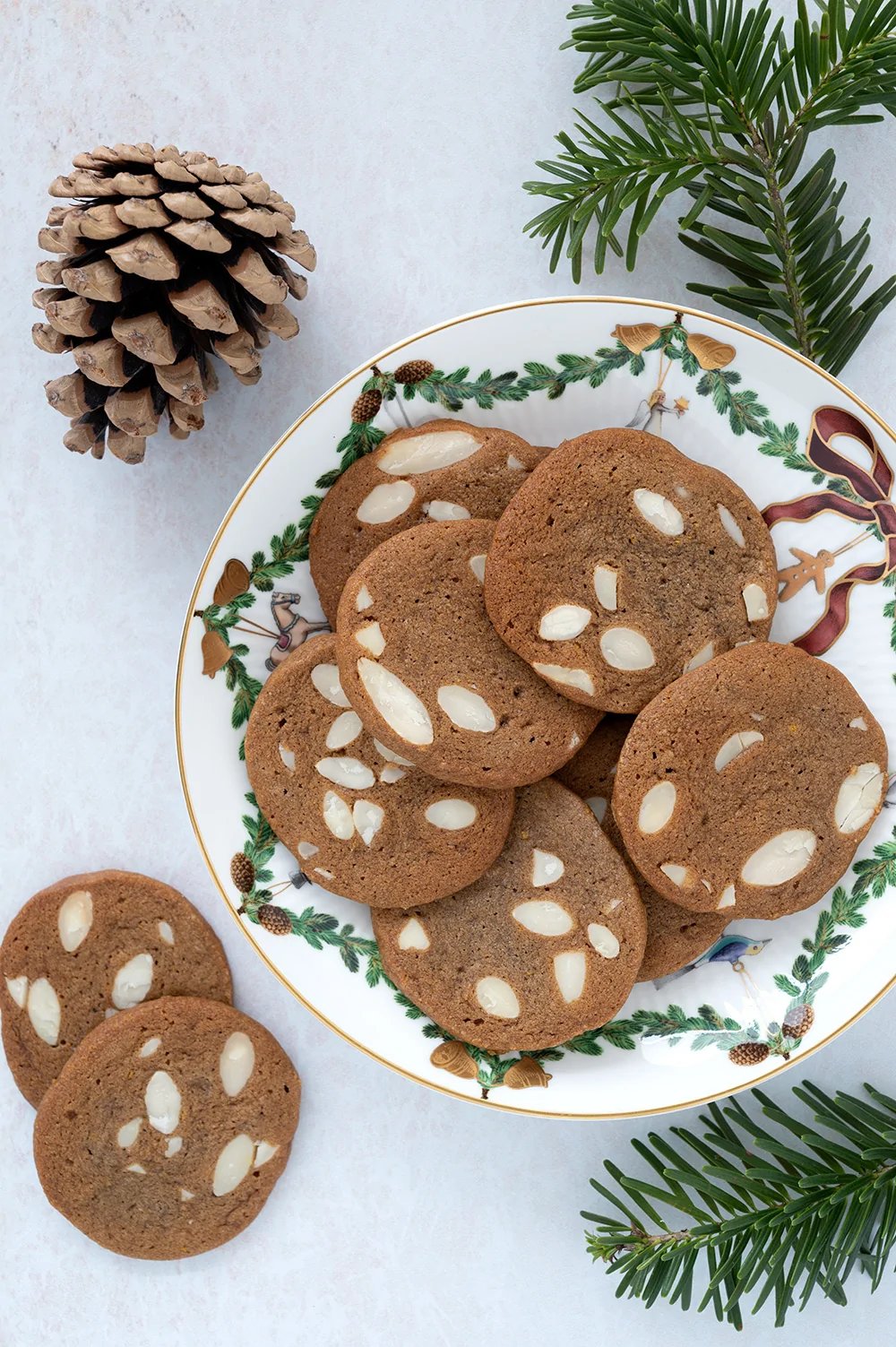
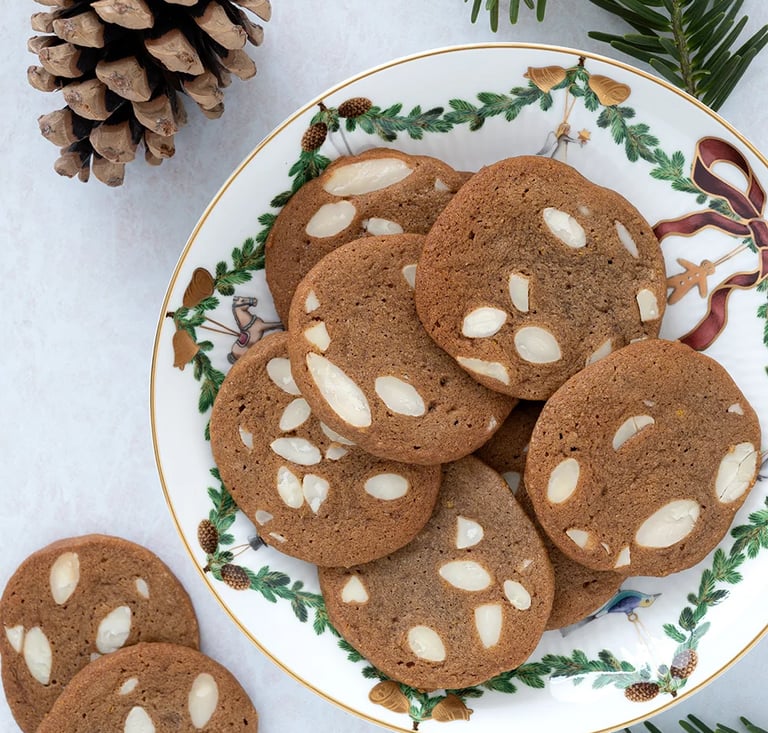
The Danish brunkager (brown cookies) are a traditional spiced biscuit closely associated with Christmas and Danish home baking culture. The name literally means “brown cakes,” referring to their color, which comes from syrup, sugar, and spices caramelized during baking. Brunkager are among the most recognizable components of julebagning (Christmas baking), and they have been part of Danish festive customs since the 19th century. Their taste, texture, and aroma reflect Denmark’s long-standing connection to trade, craftsmanship, and culinary tradition.
Historically, brunkager originated from older European gingerbread recipes that spread through the Baltic and North Sea trade routes. In the 1700s, Danish merchants imported exotic spices such as cinnamon, cloves, cardamom, and ginger from Asia and the West Indies. These spices became markers of wealth and sophistication and were gradually incorporated into domestic cooking. By the 1800s, brunkager had evolved into a distinctly Danish version of spiced cookies—thinner, crisper, and milder than their German or Dutch counterparts. They became a standard part of julehygge (Christmas coziness), representing generosity, family togetherness, and seasonal joy.
Traditional brunkager dough is made from melted butter, dark syrup, brown sugar, flour, and baking soda, flavored generously with cinnamon, cloves, and ginger. The dough is rolled into cylinders, chilled, and then sliced thinly before baking, resulting in delicate, crisp cookies. Almonds or chopped nuts are often added for texture, and many regional variations exist. Some recipes call for a hint of orange zest or pepper to balance sweetness with spice. In Danish homes, families typically bake brunkager weeks before Christmas, storing them in airtight tins to preserve their aroma until the holidays.
Culturally, the preparation of brunkager is a shared activity that connects generations. Baking sessions are often organized among families, schools, and communities, reinforcing the Danish values of participation and simplicity. The smell of brunkager baking is one of the most evocative sensory experiences of jul (Christmas) in Denmark, signaling the beginning of the festive season. The cookies are traditionally served with coffee, mulled wine (gløgg), or hot chocolate, fitting perfectly into the social rituals of hygge (coziness).
Today, brunkager remain a staple of Danish baking, found in supermarkets, bakeries, and households throughout December. Artisanal bakers often revisit old recipes, using organic ingredients or local flour, blending sustainability with tradition.
BYCYKEL
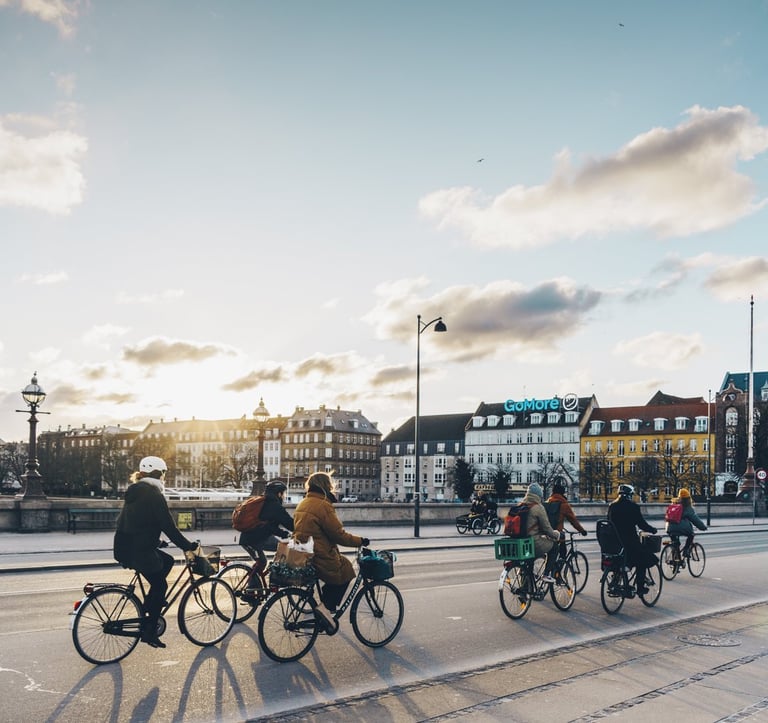
The Danish bycykel (city bicycle) is an integral part of urban life and public transportation in Denmark, particularly in Copenhagen, which is internationally recognized as one of the most bicycle-friendly cities in the world. The term refers to the publicly available bicycles that can be borrowed and returned at stations across the city, combining environmental awareness, modern design, and digital technology. The bycykel system illustrates Denmark’s broader commitment to sustainability, health, and efficient mobility within the framework of grøn transport (green transport).
The first bycykel program was launched in Copenhagen in 1995 under the name Bycyklen (the City Bike), making Denmark one of the pioneers of organized public bike-sharing systems. The early model featured simple white bicycles equipped with coin locks and fixed gear systems, intended for short trips around the city. These bikes became a cultural symbol of accessibility and civic responsibility, reflecting Denmark’s high level of trust and social cooperation. Although the original version was eventually discontinued, it laid the foundation for the modern generation of smart bycykler equipped with GPS, electric assistance, and integrated digital payment systems.
The current bycykel model, reintroduced in 2014, represents a collaboration between the City of Copenhagen and private partners. The modern fleet consists primarily of electric bicycles with built-in tablets and navigation systems, allowing users to locate available bikes and plan routes. The system is designed to complement public transportation rather than compete with it—many stations are positioned near metro, train, and bus stops, facilitating seamless travel. This reflects the Danish approach to mobilitetspolitik (mobility policy), emphasizing integration and sustainability.
Culturally, the bycykel has become more than a transport tool; it is a social equalizer. People of all ages and social backgrounds use these bikes for commuting, errands, or leisure. The program supports Denmark’s broader environmental goals by reducing traffic congestion and carbon emissions. In urban planning, bicycle infrastructure—including dedicated lanes, traffic lights, and parking facilities—has become an essential element of Danish cities, influencing international urban design standards.
The bycykel also represents the intersection of dansk design (Danish design) and technology. Its clean lines, ergonomic form, and intuitive usability embody the national aesthetic of functional simplicity. The bicycles are produced with durable, recyclable materials and designed to withstand harsh Scandinavian weather, illustrating Denmark’s focus on long-term sustainability.


DANEBROG
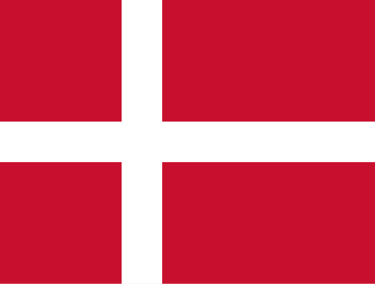
The Danish Danebrog (Danish flag) is one of the oldest national flags in continuous use and a deeply revered symbol of Denmark’s history, unity, and identity. Recognized by its simple red field with a white Nordic cross, the Danebrog is not only a political emblem but also a cultural icon that permeates daily life, national ceremonies, and personal celebrations. Its enduring presence illustrates the continuity of Danish tradition and the collective sense of belonging among Danes.
According to legend, the Danebrog fell from the sky during the Battle of Lyndanisse (present-day Tallinn, Estonia) in 1219, when King Valdemar II led Danish troops against Estonian forces. The appearance of the flag was said to have inspired the Danish army to victory, turning defeat into triumph. This story, first recorded in medieval chronicles, established the Danebrog as a divine gift and a symbol of providence and national strength. Although historians regard the tale as myth, it remains central to Danish cultural memory and patriotic sentiment.
In design, the Danebrog features a white cross extending to the edges of a red field, symbolizing Christianity and unity. It became the model for other Nordic flags, including those of Sweden, Norway, Finland, and Iceland, known collectively as the nordiske korsflag (Nordic cross flags). This shared symbolism underscores Denmark’s historical influence in the region and the cultural cohesion among Scandinavian nations. The official proportions and color shades of the Danebrog are standardized, ensuring its consistent appearance in both official and private contexts.
Beyond its historical origins, the Danebrog plays a significant role in everyday life. It is displayed not only during national holidays such as Grundlovsdag (Constitution Day) and royal celebrations but also during personal milestones like birthdays, weddings, and anniversaries. Small paper flags often decorate cakes and tables, while flagpoles adorn gardens across the country. This widespread use reflects a uniquely Danish relationship to national symbols—patriotism expressed through quiet pride rather than spectacle.
The Danebrog also carries diplomatic and maritime importance. Danish ships, embassies, and military units display the flag as a mark of sovereignty and tradition. Regulations governing its proper use are outlined in state guidelines, emphasizing respect and uniformity. The Royal Standard, a variation of the Danebrog with the Danish coat of arms, is flown whenever members of the royal family are present at official residences or events.
WIENERBRØD
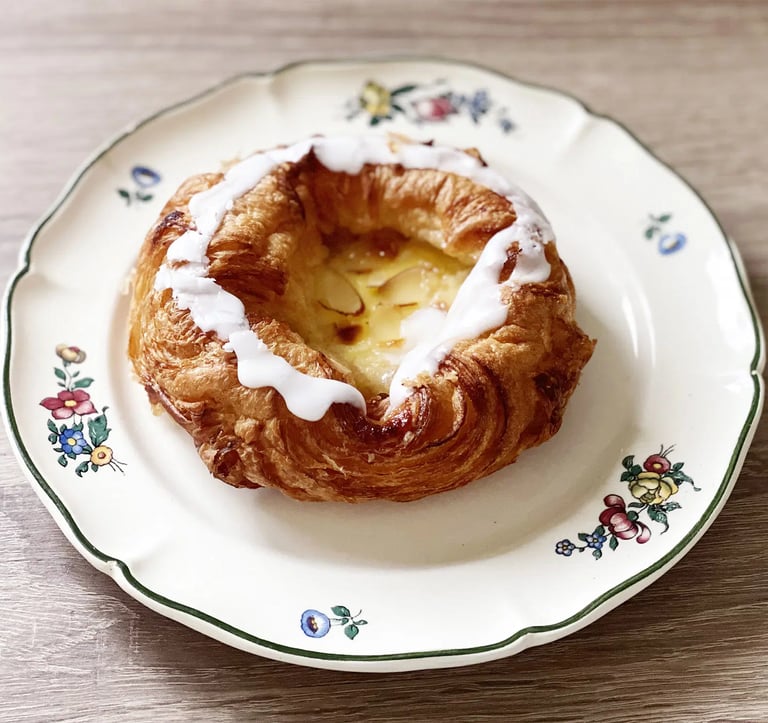
The Danish wienerbrød (Danish pastry) is one of the most internationally recognized elements of Danish cuisine and a symbol of the country’s baking tradition. Despite its name, meaning “Viennese bread,” the wienerbrød evolved in Denmark into a distinct craft combining Austrian influence with Danish techniques and flavors. It represents the skill of bagerhåndværk (baking craftsmanship), which remains a vital part of Denmark’s cultural and culinary identity.
The origin of wienerbrød dates back to the mid-19th century. During a bakers’ strike in Copenhagen in 1850, bakery owners imported Austrian bakers to keep production running. These foreign craftsmen introduced laminated dough techniques, layering butter between thin sheets of yeast dough to create light, flaky pastries. When the strike ended, Danish bakers adopted and refined the method, using local butter and sugar, and adding fillings such as almond paste, custard, jam, and cinnamon. Over time, the Danish version developed a unique texture and flavor that distinguished it from its Austrian predecessor.
By the late 19th century, wienerbrød had become a staple of dansk konditorkunst (Danish pastry art). Bakers began producing various shapes and names for different pastries, including spandauer (a round pastry with custard or jam in the center), kringle (a pretzel-shaped pastry), and kanelsnegl (a cinnamon swirl). These pastries were enjoyed as part of kaffebord (coffee table tradition), where family and friends gathered for coffee and cakes—a ritual that embodies hygge (coziness). The pastries soon spread internationally, particularly to North America, where the term “Danish” became synonymous with this style of sweet pastry.
In Denmark, the production of wienerbrød remains a respected craft requiring precision and experience. Apprentices in bagerfaget (the baking trade) learn to control dough temperature, butter distribution, and fermentation times to achieve the perfect texture. Each layer of dough—typically between 27 and 81—is carefully folded and rolled, creating the signature flaky structure. Danish butter, known for its high fat content and flavor, contributes significantly to the pastry’s richness.
Culturally, wienerbrød represents more than a dessert; it is part of Denmark’s daily rhythm. It appears in breakfast buffets, bakeries, and special occasions. On weekends, families often visit local bagerier (bakeries) to buy freshly baked pastries, a custom reflecting both indulgence and community spirit. In professional gastronomy, modern chefs reinterpret wienerbrød using new ingredients, while maintaining respect for tradition.


DANSKHED
The Danish danskhed (Danishness) refers to the collective sense of cultural identity, social behavior, and national values that define what it means to be Danish. It is not based solely on ethnicity or nationality but on shared traditions, attitudes, and social norms. Danskhed encompasses ideas such as modesty, equality, trust, and community spirit, which together shape Denmark’s political and cultural character. It remains a subject of continuous reflection and discussion in modern Danish society, particularly in connection with globalization and immigration.
The concept of danskhed developed during the 19th century, at a time when Denmark experienced territorial losses and national introspection. After the defeat in the Slesvigske Krige (Schleswig Wars) and the loss of southern territories in 1864, Danish intellectuals and politicians promoted a cultural rather than imperial understanding of the nation. Figures such as N. F. S. Grundtvig emphasized education, folk high schools (folkehøjskoler), and community participation as central to national renewal. In this context, danskhed came to signify belonging through shared language, civic responsibility, and moral values rather than military strength or expansion.
Socially, danskhed is reflected in everyday behavior characterized by jævnhed (egalitarianism) and beskedenhed (modesty). Danes tend to avoid displays of wealth or hierarchy, aligning with the informal moral code known as Janteloven (the Law of Jante), which discourages arrogance and promotes humility. This outlook fosters strong social cohesion and mutual trust, both essential to Denmark’s functioning as a velfærdssamfund (welfare society). Surveys consistently show Denmark among the world’s most trusting and least corrupt nations, qualities often attributed to the values embedded in danskhed.
Culturally, danskhed manifests in traditions such as hygge (coziness), communal celebrations, and the emphasis on equality between genders and generations. Public spaces, urban design, and education policies reflect a desire to balance individual freedom with collective well-being. The language itself—det danske sprog (the Danish language)—serves as a strong marker of identity, maintaining social unity in a small but globally connected nation.
In contemporary debate, danskhed continues to evolve. As Denmark becomes more multicultural, discussions about what constitutes Danish identity have broadened. Some interpret danskhed as inclusive, focusing on democratic values and shared participation, while others stress the preservation of cultural traditions. Scholars often describe it as a flexible identity—open to change yet anchored in historical continuity and everyday practices.


DANISH DESIGN
The Danish dansk design (Danish design) represents one of the most influential aesthetic and functional movements in modern history, known for its simplicity, quality, and respect for craftsmanship. Emerging in the mid-20th century, dansk design became synonymous with minimalism and human-centered functionality. It covers a wide range of creative fields, including furniture, architecture, industrial design, and everyday objects. Its guiding philosophy is rooted in the principle that beauty and utility should coexist, reflecting the broader cultural ideals of balance, equality, and sustainability that define Danish society.
The foundations of dansk design were established between the 1930s and 1960s, a period often called the Danish Modern era. Influenced by the Bauhaus movement and functionalist architecture, designers such as Kaare Klint, Hans J. Wegner, Arne Jacobsen, Finn Juhl, and Børge Mogensen redefined furniture and interior design. Their creations—chairs, tables, lamps, and textiles—combined natural materials with refined simplicity. The emphasis was on ergonomic comfort and timeless aesthetics rather than luxury or ornamentation. This approach embodied the Danish concept of funktionalisme (functionalism), which values clarity of purpose and honest materials.
Socially and economically, dansk design developed in parallel with Denmark’s postwar welfare model. The idea was that good design should not be reserved for the wealthy but accessible to everyone. Public buildings, schools, and social housing incorporated well-designed furniture and interiors, promoting a sense of dignity and well-being through everyday surroundings. The use of local materials such as oak, leather, and wool supported domestic industries and reinforced the national value of håndværk (craftsmanship).
Internationally, dansk design gained prominence through exhibitions and exports. During the 1950s and 1960s, Danish furniture became highly sought after in Europe, North America, and Japan. Icons like the Y-stolen (Wishbone Chair) by Wegner and the Ægget (Egg Chair) by Jacobsen became global symbols of elegance and restraint. The movement also extended to lighting, with brands such as Louis Poulsen producing lamps by Poul Henningsen that optimized light diffusion through layered shades, reflecting both artistic and scientific precision.
In the contemporary era, dansk design continues to evolve through sustainability and innovation. New generations of designers integrate recycled materials, digital production methods, and circular economy principles while maintaining the tradition of simplicity and human scale. Companies such as HAY, Muuto, and Normann Copenhagen exemplify this modern direction.

DANISH GOLDEN AGE
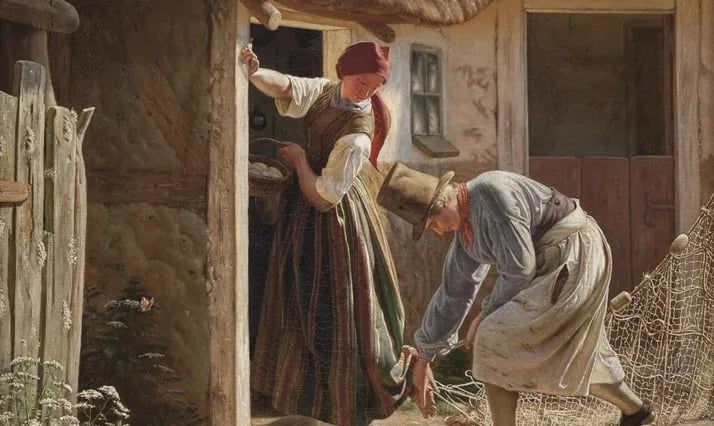
The Dansk Guldalder (Danish Golden Age) refers to a period of extraordinary cultural, artistic, and intellectual achievement that took place roughly between 1800 and 1850. It encompasses developments in painting, literature, architecture, philosophy, and science that laid the foundation for modern Danish identity. The Dansk Guldalder coincided with a time of national hardship following Denmark’s loss of Norway in 1814 and the British bombardment of Copenhagen in 1807, yet it marked a flourishing of creativity and optimism grounded in introspection and renewal.
The visual arts were at the center of the Dansk Guldalder, led by artists such as Christoffer Wilhelm Eckersberg, Christen Købke, and Constantin Hansen. Eckersberg, often called the “father of Danish painting,” introduced precise perspective, natural lighting, and realism to the Kunstakademiet (Royal Danish Academy of Fine Arts). His students, including Købke and Hansen, developed a distinctly Danish style focused on domestic scenes, landscapes, and portraits characterized by clarity and harmony. Their works captured the quiet dignity of everyday life and the beauty of Denmark’s light and architecture, establishing the foundation for the national art tradition known as dansk malerkunst (Danish painting).
In literature and philosophy, the Dansk Guldalder produced figures who would shape European thought. Poet and dramatist Adam Oehlenschläger helped define the Romantic movement in Danish literature with works celebrating nature, mythology, and national pride. Philosopher Søren Kierkegaard, considered the father of existentialism, examined individual freedom, faith, and anxiety in writings that continue to influence global philosophy. Their contributions gave Denmark a prominent position in intellectual and cultural history.
Architecture and design during the Dansk Guldalder reflected the influence of classical ideals adapted to Danish sensibilities. Buildings designed by C. F. Hansen and Michael Gottlieb Bindesbøll emphasized balance, proportion, and restrained decoration, visible in landmarks such as Copenhagen’s Vor Frue Kirke (Church of Our Lady) and Thorvaldsens Museum. Sculptor Bertel Thorvaldsen achieved international fame for his neoclassical works, which connected Danish art to broader European traditions while expressing national pride through craftsmanship and simplicity.
The Dansk Guldalder also coincided with the growth of civic institutions and education reforms that broadened access to culture. The establishment of schools, libraries, and cultural associations reflected the Danish ideal of folkeoplysning (popular enlightenment), encouraging participation in cultural life across social classes.
DRONNING MARGRETHE II
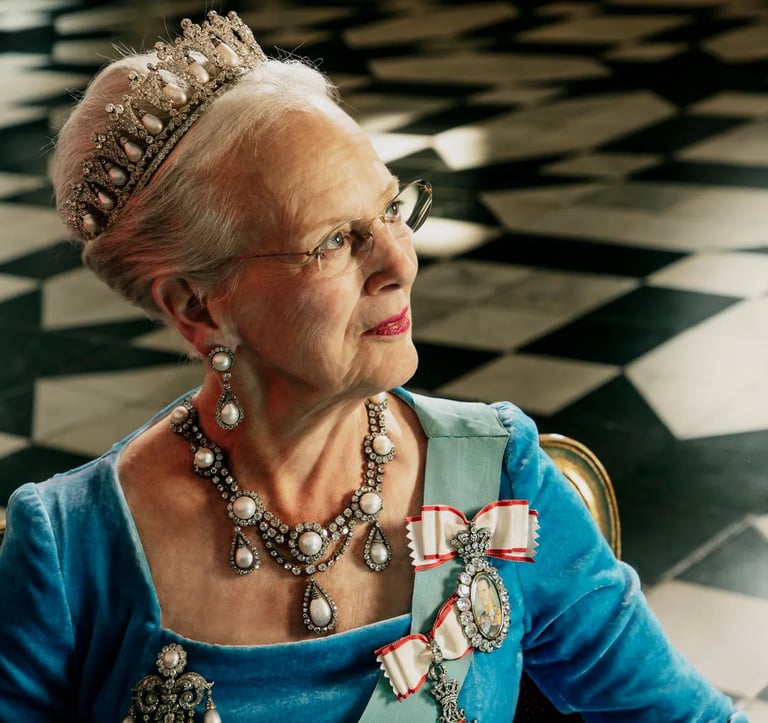
The Danish Dronning Margrethe II (Queen Margrethe II) is the constitutional monarch of Denmark and one of the most respected figures in modern Danish history. Born on April 16, 1940, she ascended the throne on January 14, 1972, following the death of her father, Kong Frederik IX (King Frederick IX). Her reign has spanned more than five decades, during which she has become a symbol of stability, cultural engagement, and national unity. As head of state, Dronning Margrethe II represents the continuity of the dansk monarki (Danish monarchy), one of the world’s oldest institutions, dating back more than a thousand years.
Margrethe Alexandrine Þórhildur Ingrid was the first Danish queen regnant since the 15th century, following the 1953 constitutional amendment that allowed women to inherit the throne. Educated at the University of Copenhagen, the University of Cambridge, and the Sorbonne, she is widely recognized for her intellect, multilingualism, and deep interest in art, history, and archaeology. Her academic background has influenced her approach to monarchy, combining tradition with cultural and intellectual sophistication.
Throughout her reign, Dronning Margrethe II has fulfilled her constitutional role as a non-political head of state, ensuring government stability and representing Denmark at home and abroad. Her weekly meetings with the statsminister (prime minister) and participation in state functions underscore the ceremonial yet significant role of the monarch in Denmark’s parliamentary system. The Queen’s New Year’s address (Nytårstale) is a major national event, where she reflects on the state of society and addresses themes of unity, responsibility, and kindness—values central to danskhed (Danishness).
Beyond politics, Dronning Margrethe II is an accomplished artist and designer. She has illustrated books, created stage designs for the Royal Danish Ballet and Royal Theatre, and published works on art and history. Her artistic identity aligns with the Danish tradition of cultural participation and creativity. Exhibitions of her work have been held in Denmark and abroad, enhancing the cultural prestige of the monarchy.
The Queen’s personality and communication style have contributed significantly to her popularity. She is known for her formality balanced with humor and authenticity, traits that resonate with the Danish public. Despite the monarchy’s ceremonial nature, she remains deeply connected to national life, participating in state visits, charity events, and royal anniversaries. In 2022, Denmark celebrated her 50th jubilee, marking a half-century of dedicated service.
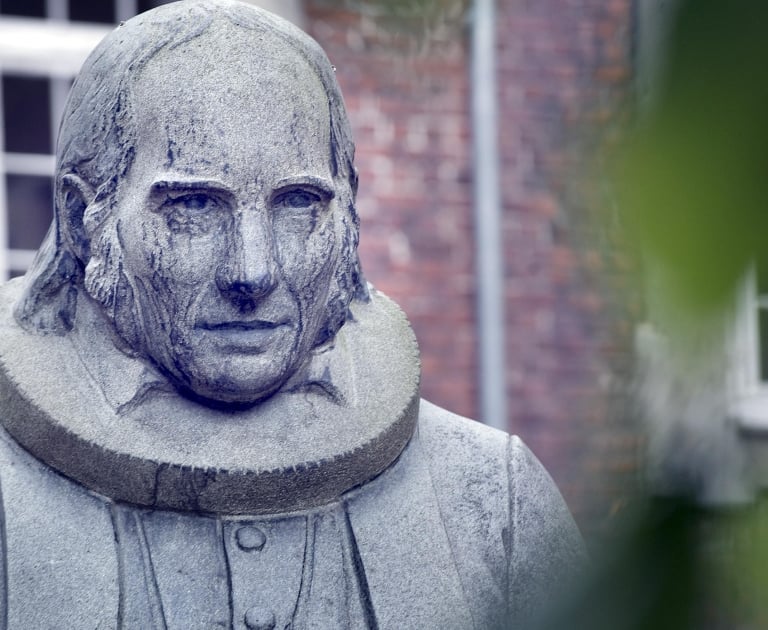
GRUNDTVIGIANISME
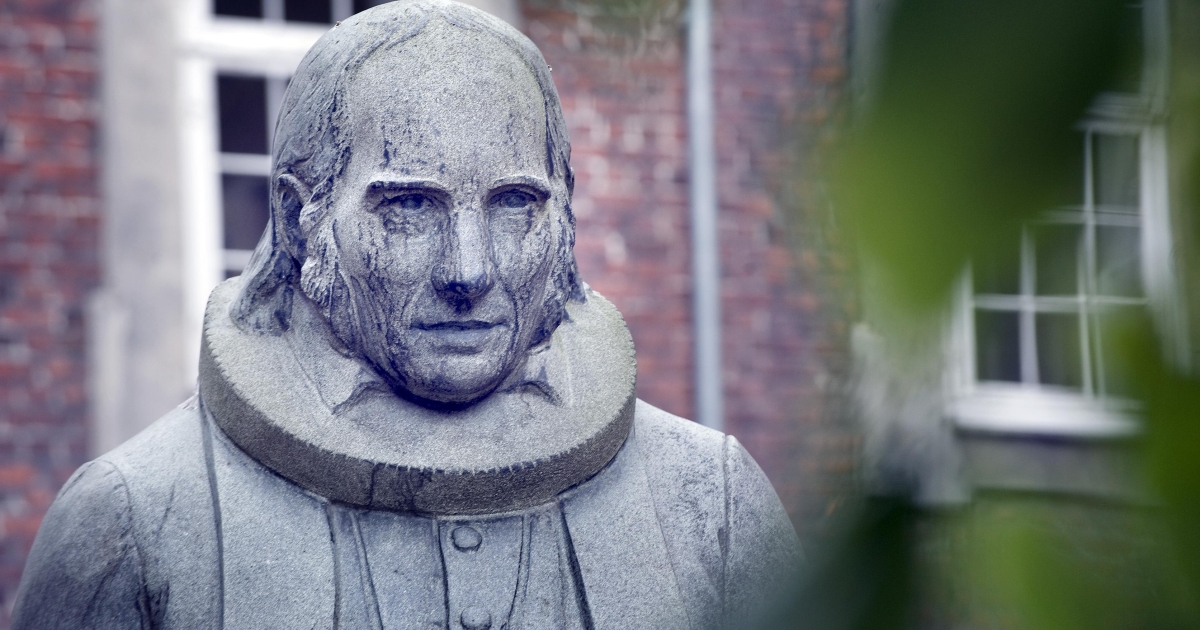
The Danish Grundtvigianisme (Grundtvigianism) refers to the social, religious, and educational movement inspired by the ideas of Nikolaj Frederik Severin Grundtvig (1783–1872), one of Denmark’s most influential thinkers, theologians, and poets. The movement shaped modern Danish identity through its emphasis on freedom, enlightenment, community, and cultural renewal. Grundtvigianisme profoundly influenced Danish education, church life, and civic culture, giving rise to institutions such as the folkehøjskole (folk high school), which continues to define the country’s approach to lifelong learning and citizenship.
At its core, Grundtvigianisme emerged as a reaction to rigid religious orthodoxy and authoritarian education in early 19th-century Denmark. Grundtvig rejected dogmatic theology, advocating instead for a “living Christianity” rooted in human experience, freedom of spirit, and dialogue. He emphasized the spoken word (det levende ord) over written doctrine, arguing that faith and understanding arise through conversation and community. This idea extended beyond religion to education and public life, where Grundtvigianisme promoted engagement, self-expression, and mutual respect—principles that became cornerstones of dansk kultur (Danish culture).
One of Grundtvig’s most enduring contributions was his concept of the folkehøjskole, a non-formal educational institution aimed at adult learners, particularly farmers and workers. The first of these schools was established in 1844 by his follower Christen Kold. Unlike traditional academic institutions, the folkehøjskoler focused on history, literature, art, and civic values rather than examinations or degrees. The goal was to awaken intellectual curiosity and strengthen folkeoplysning (popular enlightenment), empowering citizens to participate actively in society. These schools became engines of social cohesion and rural modernization in the late 19th century, spreading throughout Denmark and later influencing educational systems across Scandinavia and beyond.
In church life, Grundtvigianisme represented a more open and humanistic interpretation of Christianity. It valued national language, folk traditions, and music as expressions of spiritual identity. Hymns written by Grundtvig himself remain central to Danish worship, and his vision helped reconcile religion with national culture rather than opposing them. The movement encouraged tolerance and pluralism, distinguishing the Danish church as relatively inclusive within the Lutheran tradition.
Politically and socially, Grundtvigianisme shaped the democratic ethos that underpins Danish society. Its stress on dialogue, education, and mutual respect aligned with the development of the andelsbevægelse (cooperative movement) and later the velfærdsstat (welfare state), fostering equality and civic responsibility.


HYGGE
The Danish hygge (coziness, comfort, or contentment) is one of the most emblematic concepts of Danish culture and a defining feature of danskhed (Danishness). More than a word, hygge represents a social and emotional philosophy centered on simplicity, warmth, and well-being. It describes an atmosphere of relaxation and togetherness, often experienced with family or friends, accompanied by food, light, and a sense of safety. The pursuit of hygge is deeply embedded in daily Danish life—from interior design and social gatherings to work culture and national identity.
The origins of hygge can be traced back to the Old Norse word hyggja, meaning “to think” or “to feel satisfied.” The concept evolved during the 18th and 19th centuries as Denmark transitioned from an agrarian to an industrial society. In an era of urbanization and long, dark winters, hygge became a cultural response to the need for emotional warmth and community stability. It reflected the traditional Danish emphasis on equality, intimacy, and moderation—values that also underpin the nation’s velfærdsstat (welfare state).
In practical terms, hygge manifests in environments and behaviors that foster comfort and connection. A typical hyggeaften (cozy evening) might involve candles (stearinlys), soft lighting, wool blankets, simple food, and relaxed conversation. Unlike luxury, hygge is about accessibility and sincerity; it thrives on small pleasures such as homemade meals, reading by a fire, or sharing coffee (kaffe) with friends. This sense of simplicity aligns with Danish design principles—minimalism, functionality, and natural materials—which together create aesthetic and emotional balance.
Socially, hygge plays a significant role in maintaining Denmark’s high levels of happiness and social trust. It encourages equality and inclusion by reducing formality and emphasizing shared experience. In a hygge setting, status differences are irrelevant—what matters is presence and mutual comfort. The word is both a noun and a verb, used flexibly in expressions like at hygge sig (to have a good, cozy time). In this way, hygge becomes both an action and a mindset, emphasizing mindfulness and gratitude for everyday moments.
Psychologically, hygge serves as a form of emotional resilience. During the long, dark Nordic winters, it offers a way to cope with isolation and stress through social connection and positive ritual. Many workplaces even integrate hygge principles, promoting informal communication and well-being to strengthen team cohesion.
In recent decades, hygge has gained international recognition, with books, studies, and lifestyle brands adopting it as shorthand for Scandinavian contentment.


EXPAND YOUR KNOWLEDGE
If you are serious about learning Danish, we recommend that you download the Complete Danish Master Course.
You will receive all the information available on the website in a convenient portable digital format as well as additional contents: over 15.000 Vocabulary Words and Useful Phrases, in-depth explanations and exercises for all Grammar Rules, exclusive articles with Cultural Insights that you won't in any other textbook so you can amaze your Danish friends thanks to your knowledge of their country and history.
With a one-time purchase you will also get hours of Podcasts to Practice your Danish listening skills as well as Dialogues with Exercises to achieve your own Master Certificate.
Start speaking Danish today!
For requests or suggestions: pr@danishinstitute.org
Learn the official language of Denmark in 30 days thanks to the most complete Grammar, Vocabulary and Culture courses available. Start speaking Danish today!
© Copyright 2026 Danish Institute
Come visit Denmark!